


It is well known that South Korea has a land area of only about 100,000 square kilometers and a population of roughly 51 million; in terms of sheer scale, it is smaller than an average Chinese province.
Yet, despite its limited size, the country once wielded immense influence in the global technology sector. It led the world in several core industries for a long time, making it difficult for early-stage Chinese enterprises to compete.
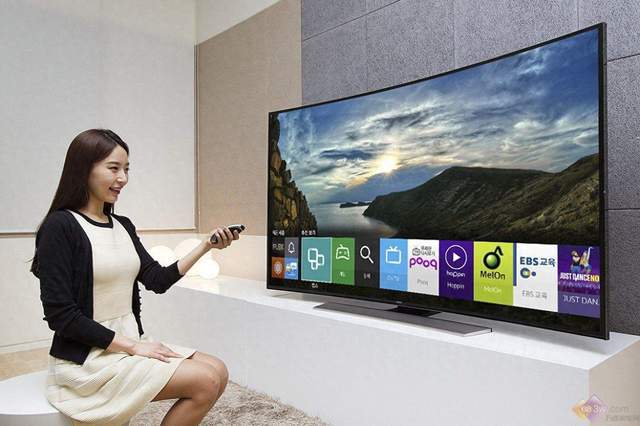
Over a decade ago, South Korean tech products were ubiquitous, and their competitive advantage was undeniable. In the automotive sector, Hyundai and Kia captured significant market share in China thanks to their reliable quality and value for money, with overall capabilities far surpassing early domestic vehicles.
Semiconductors and displays were South Korea's trump cards. Products ranging from LCD and OLED screens to DRAM memory, NAND flash storage, and various mobile phones and computers were world-class, virtually monopolizing the high-end market while Chinese companies were left playing catch-up.
However, the landscape has shifted dramatically in recent years. With the comprehensive rise of China's technology industry—achieved through steady, incremental breakthroughs—South Korea's once-prized core advantages are gradually disappearing, and China has successfully overtaken them in numerous sectors.
After reviewing decades of industrial development, many South Korean media outlets have frankly admitted that China has either surpassed South Korea or significantly eroded its lead in many key industries—a conclusion that many South Korean netizens find hard to accept.
The reversal in the display panel industry is the most striking example. South Korea once dominated the LCD panel sector, commanding over 70% of the global market and reigning as the undisputed industry leader.
https://www.china-digitalsignage.com/Products/Outdoor_Digital_Signage/
https://www.china-digitalsignage.com/Products/Portable_Digital_Signage/
Today, the situation has completely flipped; South Korea has gradually exited the mass-production LCD market and now relies on importing LCD screens from China, as domestic Chinese companies have taken full control of this sector.
Consequently, South Korea's color TV industry has continued to decline. The former duopoly of Samsung and LG has fractured; LG has fallen to fourth place globally, and Samsung's market share is steadily shrinking, leaving the industry far less competitive than it once was.
The OLED screen sector has seen an even more dramatic "leapfrog" catch-up. South Korea previously held a 95% share of the global OLED market, firmly monopolizing the supply of high-end panels for both small and large screens. Today, China's OLED industry is evolving rapidly; with continuous breakthroughs in production capacity and technology, as well as steadily rising shipment volumes, it is closing the gap with Samsung and LG—effectively shattering South Korea's long-standing monopoly.
Even in the memory chip sector—South Korea's core stronghold and greatest source of pride—formidable Chinese competitors have emerged. In the DRAM market, domestic player CXMT (ChangXin Memory Technologies) has firmly established itself as the world's fourth-largest producer; by continuously expanding capacity and doubling output, it is rapidly gaining ground on the leaders.
Breakthroughs have also been achieved in the NAND flash memory sector, where YMTC (Yangtze Memory Technologies Corp) has risen to become the fourth-largest global player. Having surpassed Micron, it now trails only the industry giants Samsung, SK Hynix, and Kioxia; through ongoing capacity expansion, it is swiftly challenging the market dominance of the two South Korean leaders.
Furthermore, the gap is narrowing across various other sectors, including chip foundries and home appliances. Samsung Foundry once held a massive lead over SMIC, but the two are now increasingly neck-and-neck, making it only a matter of time before SMIC overtakes them. Samsung’s complete withdrawal from the Chinese home appliance market serves as a vivid microcosm of the shifting competitive landscape between Chinese and South Korean technology sectors.
South Korean media has drawn an objective conclusion: whenever Chinese enterprises fully commit to conquering a specific sector, the advantages held by South Korean firms tend to gradually erode. Ultimately, South Korea faces inherent limitations regarding land area, population, and resources; these constraints on scale impose a low ceiling on its industrial growth potential.
In contrast, China possesses a complete industrial supply chain, a massive market, and an abundant talent pool. Once China launches a concerted technological push, the speed of its industrial evolution and its advantages of scale are unmatched by South Korea—factors that underpin the domestic tech sector's ability to consistently "overtake on the curve."


 +86-18025359608

 sales@china-digitalsignage.com
